Where Industrial MnO₂ Buyers Lose Money — And How to Stop
Where Industrial MnO₂ Buyers Lose Money — And How to Stop
Blog Article
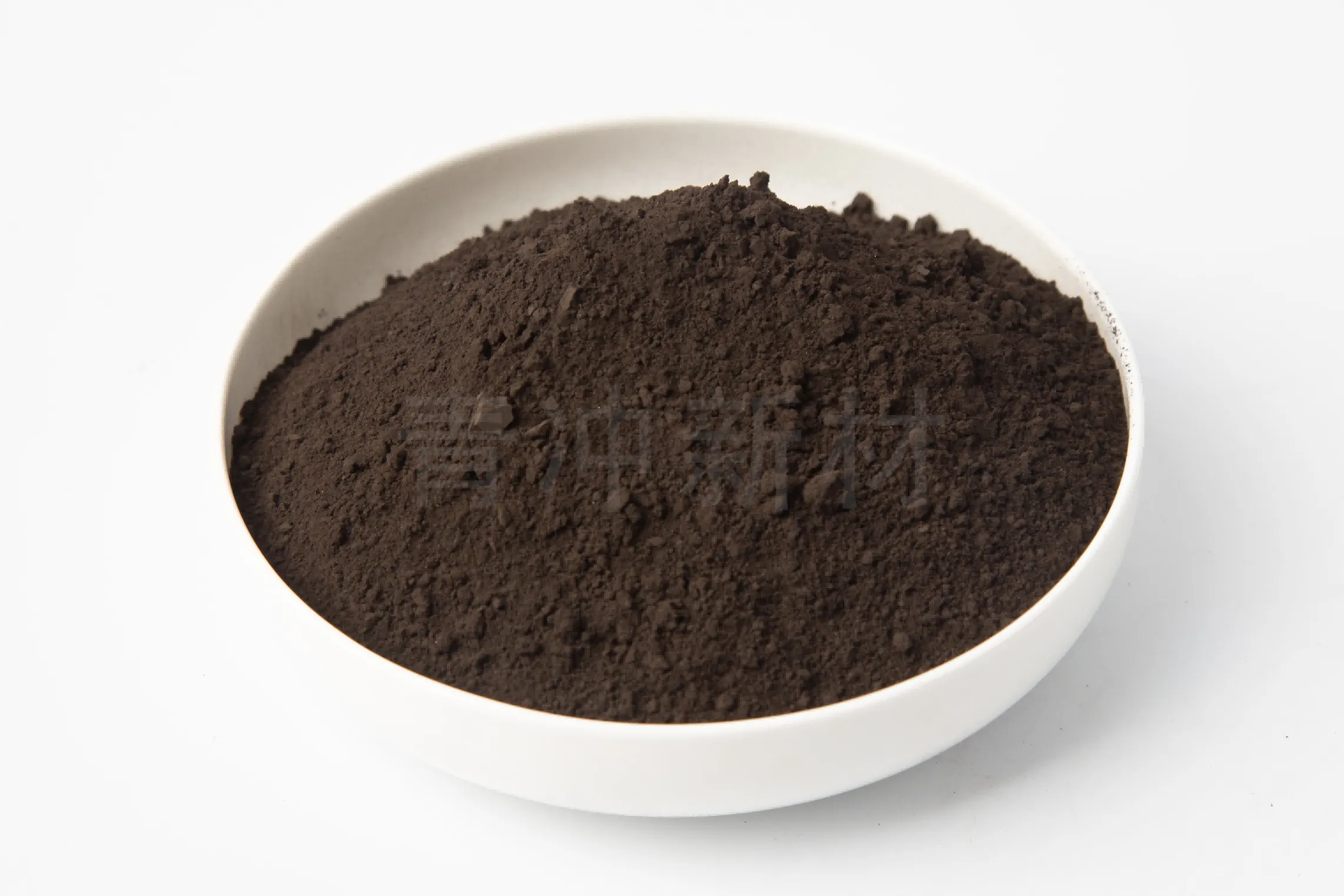
A purchasing decision framework for buyers, procurement leads, and quality engineers sourcing manganese dioxide*
Most manganese dioxide purchasing mistakes do not happen on the quotation. They happen three weeks after delivery, when a production line discovers that the "same" grade behaves differently from the qualifying sample — or when a distributor quietly changes stock, and the COA no longer matches the lot in your tank.
This article is for industrial buyers, procurement leads, and quality engineers who need to source MnO₂ for ceramic, glass, casting, cement, water-treatment, battery, catalyst, or pigment duty, and who want a purchasing framework that survives the second shipment, not just the first.
The framework has three layers:
1. **Start with the grade, not the seller.**
2. **Match the purchasing route to the risk.**
3. **Compare only comparable quotations.**
## Why "where to buy" is the wrong first question
"Where to buy manganese dioxide" sounds like a sourcing question. It is really a documentation and risk question. The seller type matters only as far as it changes the evidence your receiving process can keep.
Most MnO₂ purchasing failures fall into four categories:
- **Grade confusion.** Mineral-derived industrial powder, chemical MnO₂ (CMD), electrolytic MnO₂ (EMD), activated MnO₂ (ACMD), and granular manganese filter media are not interchangeable. A quotation may look like a comparable, but the powder does not behave like one.
- **Documentation drift.** A COA from one lot, a sales sheet from another, and a generic SDS that covers three grades. The receiving inspector has nothing to release against.
- **Lot traceability loss.** A distributor who re-bags, re-labels, or holds material across multiple lots without an upstream record. A future deviation has nowhere to land.
- **Quotation mismatch.** Different MnO₂ families, screen ranges, moisture bases, packaging configurations, Incoterms, and document scopes — priced as if they were the same.
None of these is a price problem. They are all information problems. The fix is to push the risk back upstream with a written acceptance brief before asking for a quote.
## Start with the grade, not the seller type
The first sourcing question is therefore not "Who sells MnO₂?" but "What must the material do in my plant?"
- A **ceramic, glass, casting, or cement** inquiry usually starts with an industrial MnO₂ powder and its particle form, MnO₂ range, moisture, iron, silica, and process behavior.
- A **chemistry-driven oxidation** process usually needs CMD or activated MnO₂, with activity, impurity, moisture, and particle data linked to the actual reaction.
- A **water-treatment filter media** inquiry is a granular-bed decision: raw-water chemistry, grain size, fines, hydraulic loading, and backwash capacity matter more than a headline assay.
- A **battery** inquiry needs the exact cell type and validation method. EMD must not be treated as a universal material for rechargeable or traction-battery applications; ask the supplier to confirm fit for the stated primary-battery process before approval.
When the application is clear, the material family follows. When the family is clear, the supplier type is a tactical decision, not a strategic one.
## Choose a purchasing route that fits the risk
| Route | Best fit | What it can simplify | What you still need to verify |
| ------------------- | ---------------------------------------------------------- | ------------------------------------------------------------------- | ------------------------------------------------------------------------------------------------------------------------------------------- |
| Direct manufacturer | Repeat orders, defined grade, sample or technical review | Direct access to grade info, lot documents, application discussion | Whether the proposed grade, production lot, documentation, packing, MOQ, price, and delivery terms meet your purchase requirement |
| Distributor | Local holding, smaller quantities, consolidated purchasing | Domestic delivery, local invoicing, inventory handling | Original manufacturer, storage history, lot traceability, remaining shelf-life or handling condition, whether stock is the approved grade |
| Online platform | Supplier discovery and early market screening | Fast comparison of product names, initial contacts, public listings | Identity of the actual producer, product family, current COA, sample origin, export terms, whether the listing matches the material offered |
The trade-off is practical. Buying direct may require a more detailed RFQ and longer qualification work, but it can give you a cleaner route from your specification to the proposed lot. A distributor can reduce friction for routine local purchases, but the buyer must preserve manufacturer and lot traceability. A marketplace can widen the candidate list quickly, yet a product photograph, a broad purity claim, or a low unit price does not prove grade consistency.
Use the route that protects the failure point in your process — not simply the route with the shortest first conversation.
## What to ask a manufacturer before requesting a quote
A good manufacturer inquiry reads like an acceptance brief, not a one-line price request. State the end use, country of delivery, required form, anticipated order pattern, and the values that are release limits. For powder products, that commonly includes the assay basis, impurity limits, moisture maximum, particle-size method and range, pH test condition, packaging, and receiving-sample method. For a granule, add sieve fraction, fines control, bed design inputs, raw-water conditions, and backwash capability.
Then ask the supplier to classify every line as guaranteed, typical, not controlled, or unavailable. This avoids a common sourcing failure: a sales sheet is treated as a binding specification even though it reports a typical value or another grade family. Request:
- A current technical data sheet (TDS).
- A recent lot-specific certificate of analysis (COA).
- The safety data sheet (SDS) for the proposed grade.
- Test methods or method references behind the critical values.
If import, transport, or regulated use is involved, ask for the applicable shipping and compliance documents for the destination. Do not assume that a certificate badge, a generic SDS, or an older PDF covers the shipment you will receive.
For a public overview of how MnO₂ families are positioned for industrial use, the [QingChong manganese dioxide product index](https://hnqcmy.com/product/Manganese-Dioxide) is one example of a published category page; treat it as a starting point for an inquiry, not a release document.
## How to qualify a distributor without losing control
Distributors are not automatically a weaker source. They can be the right choice when your production schedule needs local inventory, when you are purchasing a modest amount for a trial, or when local logistics and invoicing reduce operational burden.
The risk is that the material becomes separated from its original records. Ask the distributor for:
- The producer name and exact grade code.
- The original COA (not a re-issued one with a new letterhead).
- The manufacturer-issued SDS.
- The repacking or storage history.
- The lot number that will appear on your delivery documents.
Make the distributor quote against the same acceptance table you would send to a producer. Confirm whether the sample came from the stock lot, a different lot, or a manufacturer reference sample. For sensitive processes, retain a sealed receiving sample and record supplier lot, your receiving lot, test result, packaging condition, and the production line where it is used. Those records make it possible to investigate a deviation without guessing whether the root cause is material, storage, handling, or the process itself.
## Use online sourcing for discovery, then move off the listing
Online platforms are useful for finding possible suppliers, especially when you need to compare product families or identify a regional channel. Treat every listing as a lead. Before you accept a quotation, verify:
- The legal supplier identity.
- The physical production or stocking role.
- The product-page details.
- The contact route.
- The document set and sample basis.
Ask whether the seller is the manufacturer, an authorized distributor, where to buy manganese dioxide or a trader. None of those roles is inherently disqualifying, but each changes the questions you need to ask.
Do not compare quotations until the items are comparable. A bag price may differ because one offer is mineral MnO₂, another is CMD, another is EMD, or because the screen range, moisture basis, bag configuration, Incoterm, and document scope differ. Send the same RFQ brief to shortlisted sellers and ask them to flag every deviation. A lower price is not a lower total cost if the material fails incoming inspection, creates dusting or feeder issues, cannot be traced to a lot, or forces an unplanned production trial.
## Approve a commercial lot, not just a laboratory sample
Before bulk purchase, agree how the sample relates to the commercial shipment. Ask whether it came from a production lot and whether that lot can be linked to the first order. Test the delivered form under relevant conditions: powder flow, moisture, particle size, dispersion or reaction behavior, and process-specific acceptance checks. For filter media, include sieve analysis, fines inspection, and a trial that reflects water quality and backwash limits. A lab sample can pass while a commercial lot behaves differently after milling, packing, transport, or storage.
For repeat supply, include change control in the purchasing discussion. Ask what changes trigger notice: raw-material source, production route, milling or activation, particle-size control, packaging, test method, or manufacturing site. Agree on the response to a nonconforming lot before the order is placed. This is more valuable than generic promises of consistency because it defines how both parties will handle the situation that actually puts production at risk.
For water-treatment media, suppliers typically publish grade ranges and process guidance on their category page — for reference, the [QingChong manganese filter media category](https://hnqcmy.com/product/Manganese-Filter-Media) is one example. Use it to compare with the same acceptance brief you would send to any other supplier.
## FAQs
**Is it better to buy manganese dioxide from a manufacturer or a distributor?**
Buy direct when your decision depends on a defined grade, a lot-linked sample, repeated supply, or technical review. Use a distributor when local availability or smaller purchasing quantities genuinely reduce risk, but request the original producer, grade code, COA, SDS, and storage history. The right route is the one that preserves the evidence your receiving process needs.
**Can I buy EMD for any battery application?**
No. An EMD label does not prove suitability for every battery chemistry or process. Describe the cell type, whether it is a primary non-rechargeable application, the relevant particle and impurity limits, and the acceptance test. The EMD product path is a starting point for a grade inquiry, not proof of universal battery compatibility.
**What documents should I request before placing an MnO₂ order?**
Request a current technical data sheet, a recent COA tied to the proposed grade or lot, an SDS for that grade, packing and labeling details, and destination-specific transport or compliance documents where relevant. Confirm MOQ, price basis, lead time, and document availability directly with the supplier because these commercial details are not fixed by a product listing.
**How do I compare two quotations that quote different MnO₂ families?**
You do not — until you ask both suppliers to quote against the same RFQ brief and to flag every deviation. Comparing mineral MnO₂ against EMD on price-per-bag is not a comparison; it is a way to buy the wrong grade.
Report this page